







Hattingen relies on FTTO Made in Germany in schools - Early fibre optic expansion creates ideal conditions for digitalisation
Funding put to good use
In 2015, the state government of North Rhine-Westphalia and NRW.BANK launched the ‘Gute Schule 2020’ (Good Schools 2020) funding programme to renovate, modernise and expand municipal school infrastructure. In Hattingen, it quickly became clear that they would seize the opportunity to implement a comprehensive, future-oriented fibre optic solution in their schools. However, those responsible were aware that RJ-45 copper interfaces would have to be installed in the rooms themselves to ensure compatibility with all common IT end devices. The team evaluated the technologies of various manufacturers, as Leslie Leite, IT specialist and head of the school IT team, recalls: ‘The MICROSENS switches clearly impressed us with their compact design and flexibility. We were particularly pleased that the product we favoured from a technical point of view was developed and produced in North Rhine-Westphalia.’
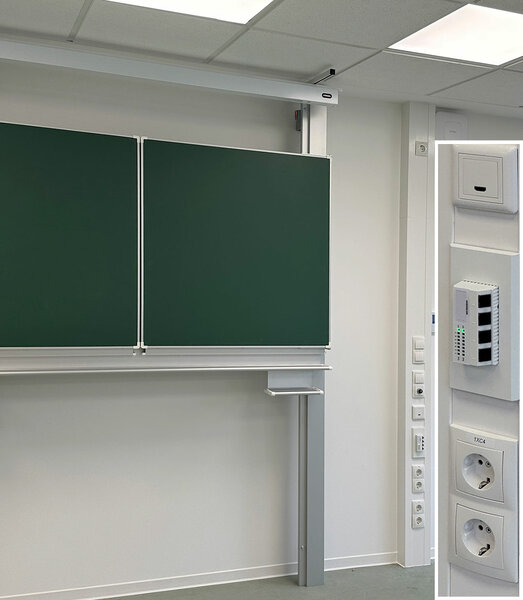
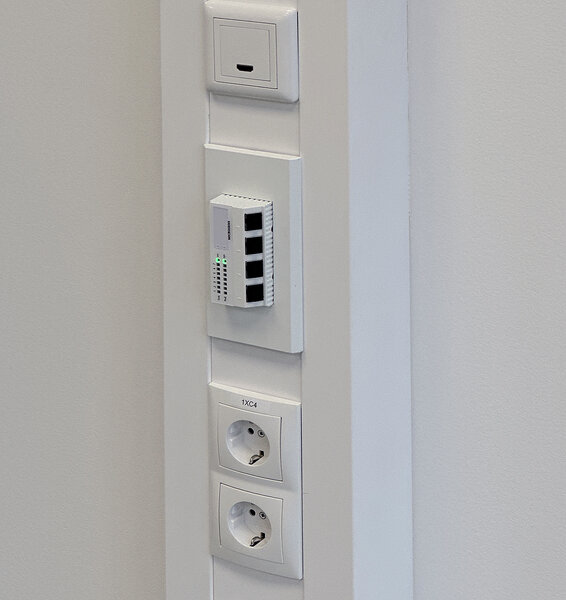
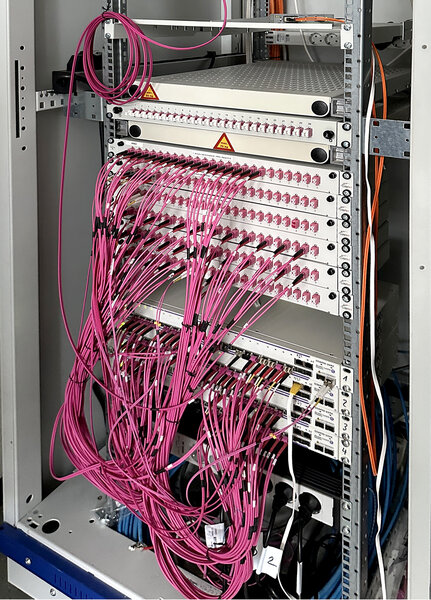
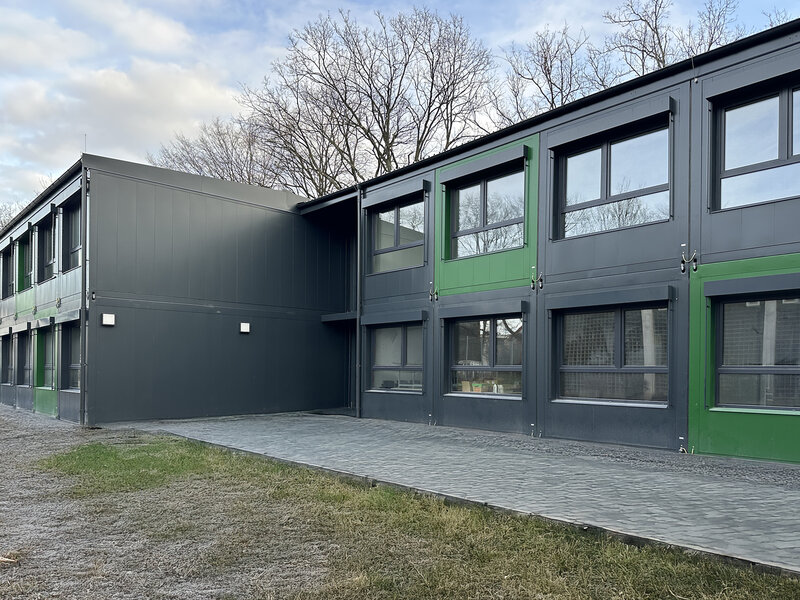
From the outset, it was clear that both primary and secondary schools should benefit from the new technology. In the first step, all school buildings were connected to the data centre via fibre optics. The city commissioned several local contractors to install the fibre optic cabling inside the buildings, some of whom had undergone special training for the project. During the summer holidays, they gradually replaced the existing structured copper cabling with fibre optics in the buildings and installed the micro switches.
A structured approach pays off
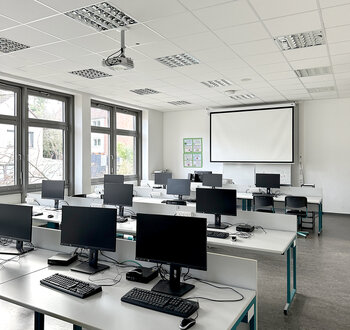
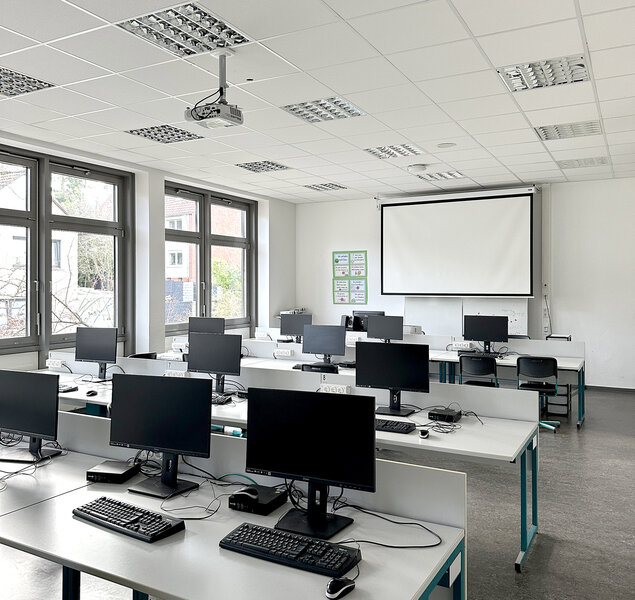
Today, more than 500 Gigabit Ethernet micro switches are in use in classrooms and offices in Hattingen. The full 10 gigabits that would be available in all rooms are currently already being used in rooms with high data transfer requirements. Micro switches with 10 Gigabit Ethernet have already been installed in some auditoriums and IT rooms in combination with several access points.
All components are categorised and systematically assigned to the respective structures. Leslie Leite is convinced that this systematic approach has paid off: "MICROSENS suggested that we assign unique identifiers to the ordered switches according to our planning before they were installed. Based on a list we had created, the switches were configured and labelled with the appropriate stickers before delivery. Our service providers only had to install the components via plug-and-play. This saved us valuable time."
The IT team then integrated all components into MICROSENS' central network management system, NMP Professional. Since then, they have been monitored by the school's IT team. This has made work much easier, as Leslie Leite explains: ‘We can configure each switch individually, but control updates centrally and uniformly. Compared to other providers, the management console is extremely easy to use.’
Centralised expertise tailored to individual needs
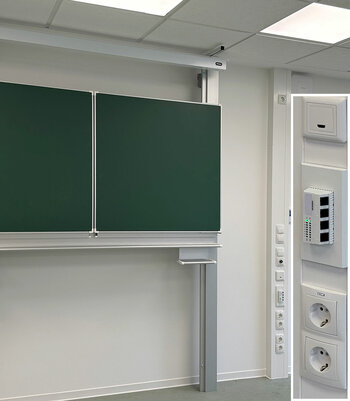
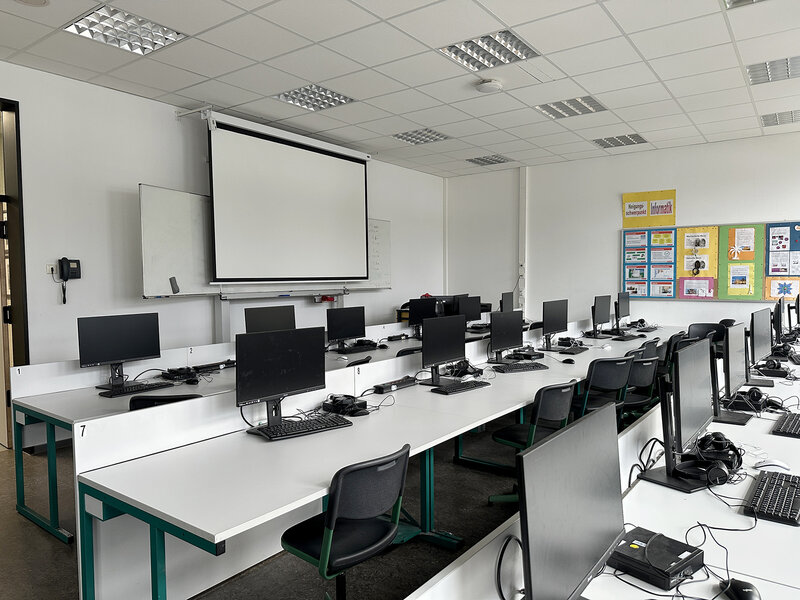
Based on a uniform infrastructure consisting of fibre optics, micro switches and access points, the team was able to implement a standardised school IT concept: in all schools in Hattingen, the administrative network and the educational network are strictly separated from each other. In the classrooms, Wi-Fi access points are connected directly to the micro switches and are powered via the Power over Ethernet function. The port provided for this purpose is specially installed in the cable duct for additional protection. For security reasons, the individual areas of the respective school network are consistently subdivided into separate VLANs.
The schools use a uniform management platform for the educational network to manage access authorisations and identity checks. This allows schools to implement their own individual rules; public Wi-Fi is not provided. At some schools, however, pupils can bring their own devices and log in with their central educational ID. Once the teacher has approved the use of the devices for a project, the device can be logged into the designated Wi-Fi network (bring your own device network).
Ideal conditions for digital progress
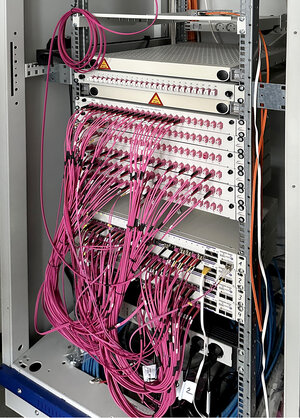
In addition to more efficient network management, standardisation in Hattingen also brings significant benefits for the people who use it every day: changing schools in Hattingen is now easy, at least in terms of technology. Teachers who change schools can immediately find their way around the IT system. In addition, the barriers to entry for the introduction of new technologies have been lowered. Whether electronic whiteboards or tablet classes, the concepts could be implemented much more quickly in Hattingen than in schools with a poorly developed network structure.
Overall, the school IT department can implement changes quickly. The IT experts have prepared numerous scripts to automate configuration changes on multiple micro switches. The required parameters are entered into the finished script and automatically sent to all affected micro switches. This is an advantage that Leslie Leite has come to appreciate from his many years of experience: ‘Schools are very dynamic; rooms are used for other purposes, tablet classes are to be taught in one room, or a new VLAN is to be set up for a dedicated application. All of this can be controlled quickly and easily remotely with MICROSENS switches. We greatly appreciate this flexibility, together with the security features and reliability of the components.’
Sobre MICROSENS
La transmisión de información a través de conexiones de fibra óptica aporta numerosas ventajas. MICROSENS GmbH & Co. KG se dio cuenta de ello muy pronto. Como una de las pioneras, la empresa lleva desarrollando y produciendo sistemas de comunicación y transmisión de alto rendimiento en Alemania desde 1993. Adaptados individualmente a los requisitos de los distintos ámbitos de uso e integrados en conceptos integrales para industrias concretas. Pero, sobre todo, cerca del cliente. Los retos técnicos de los proyectos de los clientes fluyen directamente hacia el desarrollo de los productos. Así es como se crean soluciones de automatización basadas en IP para edificios modernos, conceptos de red rentables para oficinas y centros de trabajo, soluciones robustas y a prueba de fallos para entornos industriales, sistemas de transporte óptico para redes de área extensa orientadas al futuro y el acoplamiento eficaz de ubicaciones y centros de datos.


 YouTube
 LinkedIn